
NURS FPX 4025 Assessment 1 Analyzing a Research Paper

Student Name
Capella University
NURS-FPX4025 Research and Evidence-Based Decision Making
Prof. Name
Date
Analyzing a Research Paper
Figure 1
Keywords: Gout disease, Telemedicine, Likert scale, Patient satisfaction, Telephone-based management program, Serum uric acid
Reference:
Al Harash, A., Laginya, G., & Ayoub, W. T. (2021). Efficacy and outcomes of a novel telephone-based gout disease management program. The Open Rheumatology Journal, 15(1), 51–56. https://doi.org/10.2174/1874312902115010051
Date of Publication: 11 August 2021
Research Article Evaluation
What type of study is presented in the article?
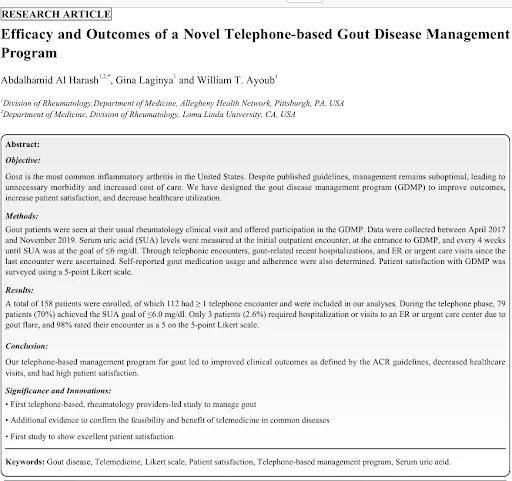
The article by Al Harash et al. (2021) presents a prospective quality improvement (QI) study that evaluates the effectiveness of a telephone-based disease management program for patients diagnosed with gout. Instead of relying on conventional in-person consultations, the study explores the use of telecommunication methods to improve patient outcomes. This approach reflects a shift toward telemedicine, which enhances accessibility and continuity of care, particularly for patients managing chronic illnesses.
What is the pyramid level of this study?
This study is categorized as Level V evidence within the evidence-based practice hierarchy. Level V includes quality improvement projects, case studies, and expert opinions that do not involve randomized controlled trials or experimental comparisons. Although it lacks the rigor of higher-level evidence, it still provides valuable clinical insights and practical implications for improving patient care processes.
What methodology was used in the study?
The researchers included 158 patients diagnosed with gout between 2017 and 2019. Initially, participants received standard rheumatologic care, after which they were enrolled in a structured telephone-based follow-up program. During these follow-ups, healthcare providers monitored serum uric acid (sUA) levels every four weeks until the desired therapeutic target was achieved.
In addition to laboratory monitoring, the study evaluated medication adherence and collected patient satisfaction data using a Likert scale. This structured and consistent follow-up process allowed clinicians to adjust treatment plans promptly and ensured continuous patient engagement. The methodology highlights the importance of regular monitoring and patient-provider communication in chronic disease management.
What factors contribute to the credibility of the study?
Several aspects strengthen the trustworthiness and reliability of this research. These factors are summarized below:
| Factor | Description |
|---|---|
| Providers | The program was implemented by trained rheumatology specialists, ensuring clinical expertise. |
| Sample Size | A total of 158 participants provides a reasonably strong dataset for analysis. |
| Ethical Considerations | The study received Institutional Review Board (IRB) exemption as a QI project. |
| Data Collection | Both objective (serum uric acid levels) and subjective (patient satisfaction) data were included. |
| Limitations | The absence of a control group limits the ability to compare outcomes with standard care. |
Additionally, the use of standardized measurements and consistent follow-up intervals enhances the internal validity of the findings. However, future studies with randomized designs would strengthen the evidence further.
How is the study relevant to diagnosis and clinical practice?
The study is highly relevant to clinical practice because it demonstrates that regular remote monitoring can help patients achieve target serum uric acid levels (≤6 mg/dl), which is essential in preventing gout flares and long-term complications. By integrating telemedicine into care delivery, healthcare providers can diagnose and manage disease progression more efficiently.
Furthermore, this approach supports early identification of treatment gaps, enabling timely interventions. It also reduces barriers such as travel constraints and clinic overcrowding, making healthcare more accessible and patient-centered.
How can this study be applied in the workplace?
In clinical settings, telephone-based follow-ups can be incorporated into routine care to improve patient outcomes while reducing healthcare costs. Providers can remotely monitor laboratory values, adjust medications, and educate patients on adherence strategies.
This method is particularly beneficial for patients with chronic diseases who require continuous monitoring. It minimizes unnecessary hospital visits and helps prevent complications that may lead to emergency care. Nurses and healthcare professionals can use this approach to deliver proactive, efficient, and patient-focused care.
Sentinel U Patient
Figure 2
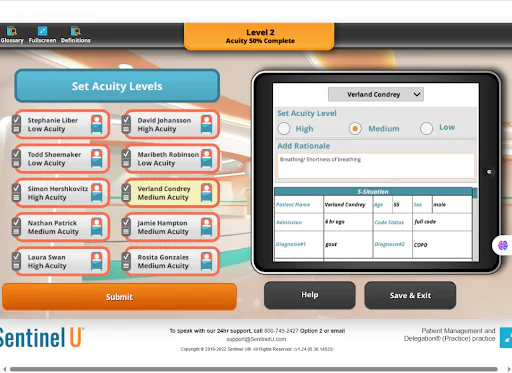
| Patient Information | Details |
|---|---|
| Name | Verland Condrey |
| Diagnosis | Acute exacerbation of gout with inflammation in the left lower extremity |
| Treatment | Intravenous fluids, intravenous colchicine, and patient-controlled analgesia (PCA) |
| Care Plan | Monitor respiratory status, manage severe pain (8/10), provide supportive care, and evaluate response to treatment |
Summary of Findings
What were the key findings of the study?
Al Harash et al. (2021) implemented a telephone-based gout management program involving 158 patients, of whom 112 completed at least one structured follow-up call. The primary aim was to maintain serum uric acid levels at or below 6 mg/dl, consistent with established clinical guidelines.
The findings revealed that approximately 70% of participants successfully achieved the target uric acid levels. Regular telephonic follow-ups facilitated continuous monitoring, timely medication adjustments, and improved adherence to prescribed therapies. As a result, there was a noticeable reduction in hospital admissions and emergency visits related to gout flare-ups.
Patient satisfaction scores were notably high, indicating acceptance and effectiveness of the intervention. The program provided a convenient alternative to in-person visits, reducing both time and financial burdens on patients. Overall, the results highlight the effectiveness of telemedicine in managing chronic conditions such as gout.
Relevance and Potential Effectiveness of Evidence
How effective and relevant is the evidence for practice?
The evidence presented in this study is highly applicable to modern healthcare practices, particularly in the management of chronic diseases. Maintaining optimal uric acid levels is critical in preventing complications associated with gout, and the study demonstrates that telemedicine can play a key role in achieving this goal.
The credibility of the research is supported by its publication in a peer-reviewed journal, a well-defined sample population, and systematic data collection methods. However, the lack of a control group remains a limitation, as it restricts direct comparison with traditional care models.
Despite this limitation, the study strongly supports the integration of telephone-based interventions in clinical practice. Healthcare providers, especially nurses, can use telehealth strategies to enhance patient engagement, improve medication adherence, and deliver cost-effective care. This aligns with the growing emphasis on patient-centered and technology-driven healthcare solutions.
NURS FPX 4025 Assessment 1: Analyzing a Research Paper
Article Link: https://doi.org/10.2174/1874312902115010051
References
Al Harash, A., Laginya, G., & Ayoub, W. T. (2021). Efficacy and outcomes of a novel telephone-based gout disease management program. The Open Rheumatology Journal, 15(1), 51–56. https://doi.org/10.2174/1874312902115010051